
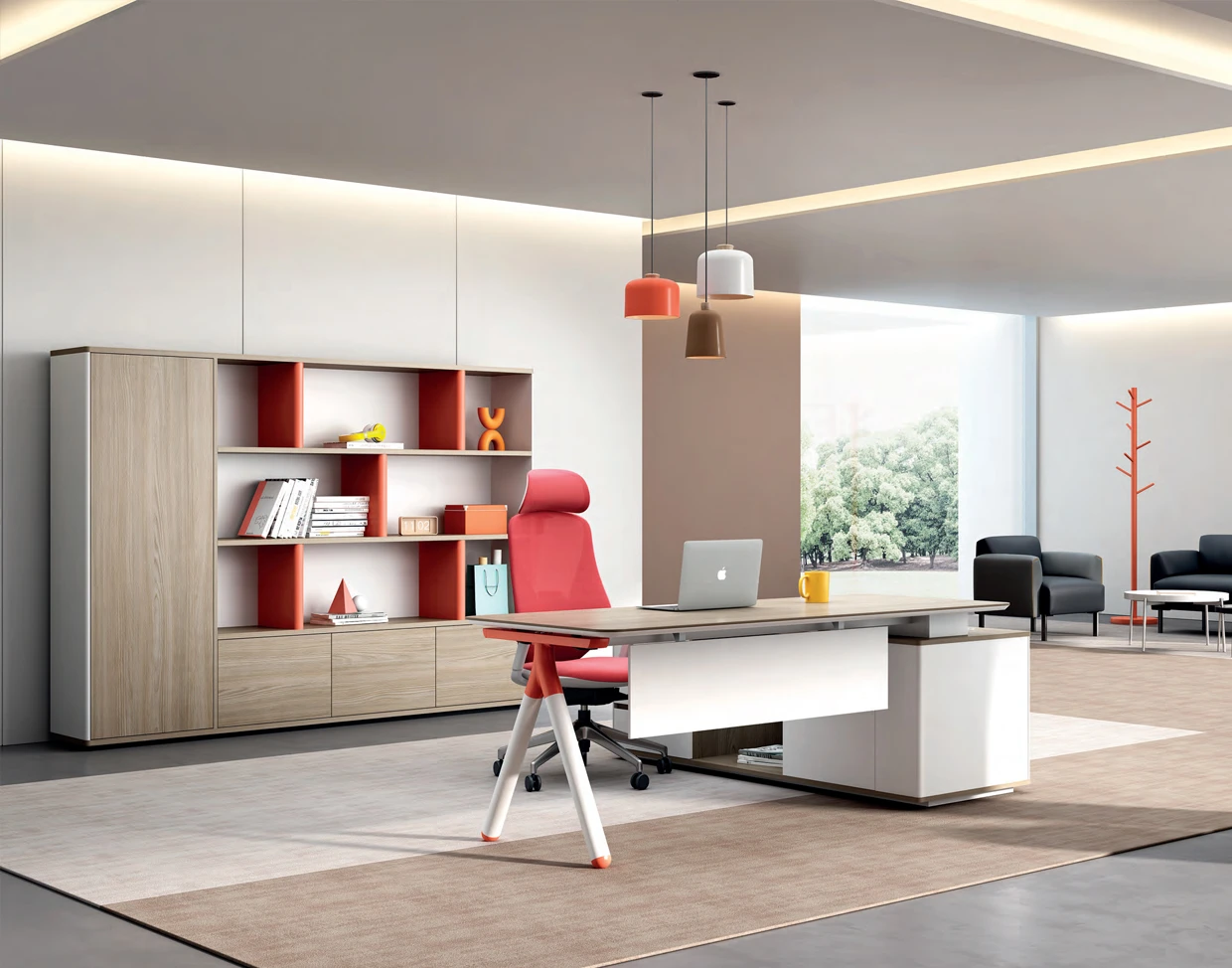
In 2026, offices in Kazakhstan are becoming less formal, but more demanding in terms of functions. Companies are rethinking fixed seating, adding space for video calls, demanding transparent delivery times, and pricing furniture across its entire lifecycle, not just the starting price.
[Decision guide]
What this article will help you decide
companies that complete an office or branch network in Kazakhstan
connect the project, packaging, intercity logistics and installation in one schedule
do not calculate the deadline only by the availability of goods: packaging, route, reloading, access to the site and local installation change the launch date
1. An office for hybrid rather than average traffic
Companies more often analyze workload by day and department. Instead of an automatic workplace, flexible positions appear for each employee, but space savings only work if there are reservations, lockers and convenient reconfiguration.
Practical conclusion: count not only the staff, but also the peaks in attendance. Keep a reserve for general meeting days and new hires.
2. More small rooms and places for video calling
One large meeting room does not solve dozens of parallel calls. The role of small rooms, telephone booths and quiet corners is growing. They are placed closer to work areas so that the call does not turn into a long route through the office.
3. Acoustics become part of the package
Noise is no longer perceived as an inevitable cost of open space. Acoustic screens, panels, soft surfaces and zoning are considered together with furniture. It is not just one product that is important, but the balance of sound sources, absorption and rules of use.
4. Modularity instead of one-off layout
Growing companies want to change clusters without a full purchase. System tables, mobile screens, modular sofas and unified finishes simplify rearrangement and additions.
This does not mean that all furniture should be on wheels. Flexibility starts with a standard: clear dimensions, compatible elements and stored specifications.
5. Space as part of the HR experience
The office competes with the convenience of remote work. Employees expect normal ergonomics, light, quiet for concentration and space for communication. The effect is created not by decorative “Instagram” zones, but by the convenience of each work scenario.
6. Local availability and managed logistics
For projects in Almaty, Astana and the regions, real availability, clear packaging, consolidation and service after delivery are important. Customers more often separate warehouse and order items, reserve critical series and agree on analogues in advance.
A showroom and warehouse program helps verify materials and reduce uncertainty, especially when an office must open by a fixed date.
7. Cost of ownership instead of minimum price
Questions are increasingly being added to the purchase: is it possible to replace the chair mechanism, order five more tables in a year, quickly receive service and repeat the finishing? Furniture with accessible details and support maintains a cohesive office look for longer.
The main trend of 2026 is not a specific style, but manageability: the office should change with the team and remain comfortable after the first day.
How to apply trends without extra costs
- Conduct a short audit of attendance and work scenarios.
- Identify two or three problems that are hindering the team right now.
- Assemble a pilot zone and test it before mass ordering.
- Choose from modular series and limited finishes.
- Agree on the replenishment plan and service conditions.
- Evaluate the effect after the move and adjust the rules of use.
PoMo Union Office has been working with corporate spaces in Kazakhstan for more than 20 years. Practice shows that the most durable solutions are those that are connected to the company’s real processes and are supported by documentation, logistics and service.
A low-commitment first step
Estimate a project and delivery to your city
Send the city and address of the facility, plan, volume, date of readiness of the premises, restrictions on unloading and installation. During working hours, the team will clarify the missing data and prepare a preliminary composition of the delivery and calculation of the logistics scenario.
- 01
You share the project details city and address of the facility, plan, volume, date of readiness of the premises, restrictions on unloading and installation.
- 02
We review the brief We clarify the restrictions, availability and scope of work.
- 03
You receive a clear next step preliminary composition of the supply and calculation of the logistics scenario.